Anthropic tightens third-party Claude access as OpenClaw users brace for a native rival
Anthropic says Claude subscriptions will no longer cover third-party tools such as OpenClaw. The immediate commercial shift is clear. The strategic read is harder to ignore.
Listen to this article
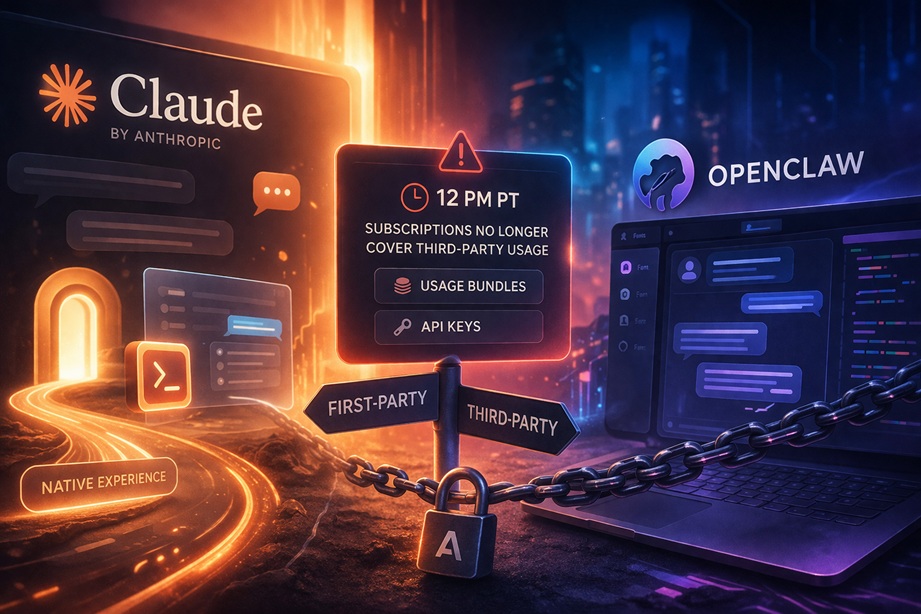
Third-party Claude access is getting tighter. Boris Cherny says Claude subscriptions will no longer cover usage on third-party tools such as OpenClaw from 12pm PT on 4 April, with users pushed toward discounted usage bundles or API keys instead. That is the factual change. The more interesting question is what it says about Anthropic’s direction.
The cleanest read is commercial. Anthropic is tightening how Claude usage is monetised outside its own surfaces. But the follow-up post from Suhail Kakar, arguing that Anthropic is likely building something native to undercut OpenClaw, is not a mad theory either. If a provider starts restricting third-party wrappers while preserving a first-party experience, people will reasonably ask whether a house alternative is on the way.
What changed for third-party Claude access?
The change is simple enough. Claude logins can still work with third-party tools, but usage is no longer covered under the ordinary subscription model. Users now need extra usage bundles or an API key. That shifts the economics for heavier users and makes third-party integrations less attractive by default.
For tools such as OpenClaw, the immediate effect is cost and friction. A product can survive those. A product built on another company’s commercial tolerance, less so.
Starting tomorrow at 12pm PT, Claude subscriptions will no longer cover usage on third-party tools like OpenClaw.
You can still use these tools with your Claude login via extra usage bundles (now available at a discount), or with a Claude API key.
— Boris Cherny (@bcherny) April 3, 2026
Why Anthropic may want a native answer
The speculative part is the product strategy. If Anthropic is serious about protecting margin, controlling user experience and reducing platform leakage, a native alternative makes sense. A first-party agent shell or operator layer would let it capture the workflow while keeping monetisation, support and policy enforcement closer to home.
That does not prove a launch is imminent. It does suggest the market should stop assuming model providers are content to remain plumbing forever. The largest vendors increasingly want the workflow as well as the model.
What follows from this?
The broader message for agent builders is uncomfortable but familiar: dependency risk is real. If your product experience depends on a model vendor tolerating a particular billing path, that is not a moat. It is a lease. Anthropic’s move sharpens that point.
This article is for information only and is not financial advice.
Sources
- Anthropic consumer terms of service (updated)anthropic.com
- OpenClaw maintainers' statement to usersgithub.com
From the YFarmX archive · originally published on the previous site